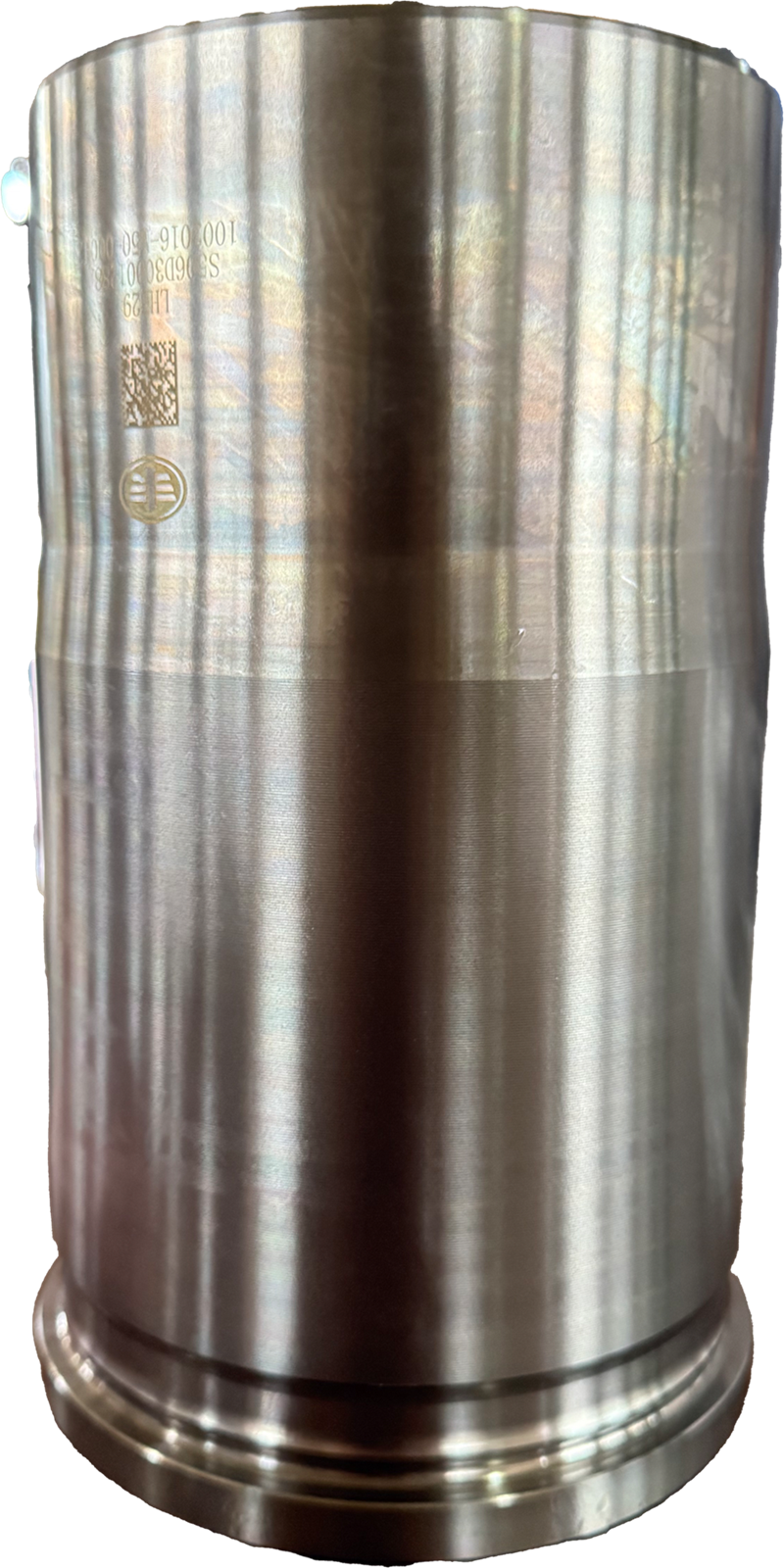
The cylinder liner is an important component in the engine, installed inside the cylinder body, directly in contact with the piston and piston rings, forming a part of the combustion chamber and guiding the reciprocating motion of the piston. The following is a detailed explanation about the cylinder liner:
1. Function
Guidance function: Provide precise motion trajectory for the piston and maintain sealing.
Heat dissipation: Transfer the heat generated by combustion to the cooling system (water-cooled or air-cooled) outside the cylinder body.
Wear resistance: withstand high-frequency friction of piston rings, reduce wear of cylinder blocks (cylinder blocks are usually made of cast iron or aluminum alloy, while cylinder liners can be made of more wear-resistant materials).
Sealing: Cooperate with the piston ring to seal the combustion chamber, maintain compression pressure and prevent gas leakage.
2. Materials
Cast iron: commonly used alloy cast iron (such as high phosphorus cast iron, boron cast iron), wear-resistant and low-cost.
Steel: A few high-performance engines use chrome plated steel sleeves to enhance wear resistance.
Composite materials: Some modern engines use aluminum based composite materials to reduce weight.
3. Common problems and repairs
Wear and tear: Friction of the piston ring causes scratches or loss of roundness on the inner wall, which needs to be repaired or replaced by boring the cylinder.
Pulling cylinder: Insufficient lubrication or overheating can cause adhesion between the cylinder liner and piston, and replacement is necessary in severe cases.
Cavitation (wet cylinder liner): The outer wall is corroded by coolant bubbles, and the sealing and coolant quality need to be checked.
Crack: caused by thermal or mechanical stress, needs to be replaced.
4. Precautions for replacement
Measure the fit clearance: The clearance between the piston and the cylinder liner must comply with the manual standards.
Surface treatment: The new cylinder liner requires honing the inner wall to retain the lubricating oil film.
Sealing inspection: After installing the wet cylinder liner, it is necessary to test the sealing performance of the coolant.
5. Modern development trends
Cylinder free technology: Some aluminum alloy cylinder bodies use plasma spraying or nickel silicon carbide coating (such as Nikasil) instead of traditional cylinder liners to reduce weight.
Nano coating: enhances wear resistance and reduces friction (such as DLC coating).